This week
Condo and High-Rise Duct Cleaning in Toronto
Cleaning the in-suite fan coil and its filter, and the suite side of the exhaust. The riser itself is the corporation's, and a good company will tell you where the boundary is.
Call about Condo and High-Rise Duct Cleaning
(858) 284-0173No charge to you, and you are never committed to going ahead.
What happens when you call
- You describe the problem and where you are.
- We put you in touch with the insured partner covering that area.
- They arrange the visit and agree the price with you directly.
Worth having ready
- What you have noticed, and when the system does it
- Whether the house has had recent renovation work
- Whether there is an HRV or ERV in the basement
- Your postal code
- Insured & WSIB-covered Ontario does not licence this trade at provincial level, so the checks that actually mean something are current liability insurance and a WSIB clearance certificate. Ask the partner to see both — a legitimate one hands them over without being chased.
- Know what to ask You are told what actually decides the price, so you can judge a quote.
- Someone local You are put through to a technician who works your area, not a call centre in another province.
- Calls answered 7 days Someone picks up seven days a week, weekends included.
Is it urgent?
This week
In a stacked building a smell or a noise rarely belongs to the unit that reports it. The riser is shared, which is why this often has to be a building conversation rather than a suite one.
Two things override everything on this page. If anyone has symptoms of carbon monoxide exposure — headache, nausea or dizziness that improves outdoors — leave the building and call the gas utility or the fire service, not a duct company. And if a dryer smells of burning while it is running, stop using it: lint is an ignition source and that smell is the warning.
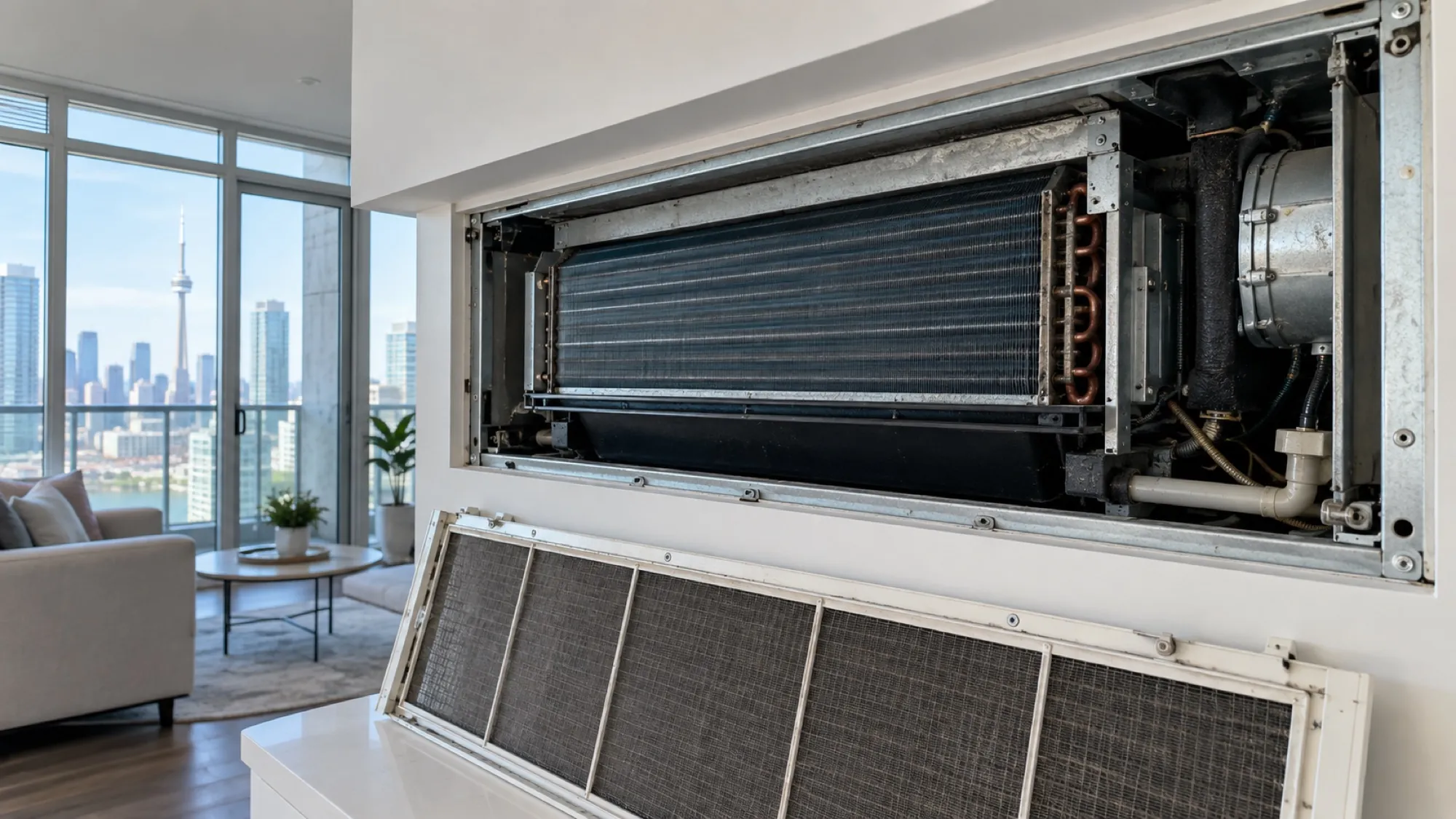
Signs to look for
- Cooking or smoke smells arriving from another unit
- A bathroom fan that runs but moves nothing
- Dust building on the fan coil grille faster than it should
- The suite feeling stuffy with the windows closed
How the work is done
- Establish what is in-suite and what belongs to the corporation before starting
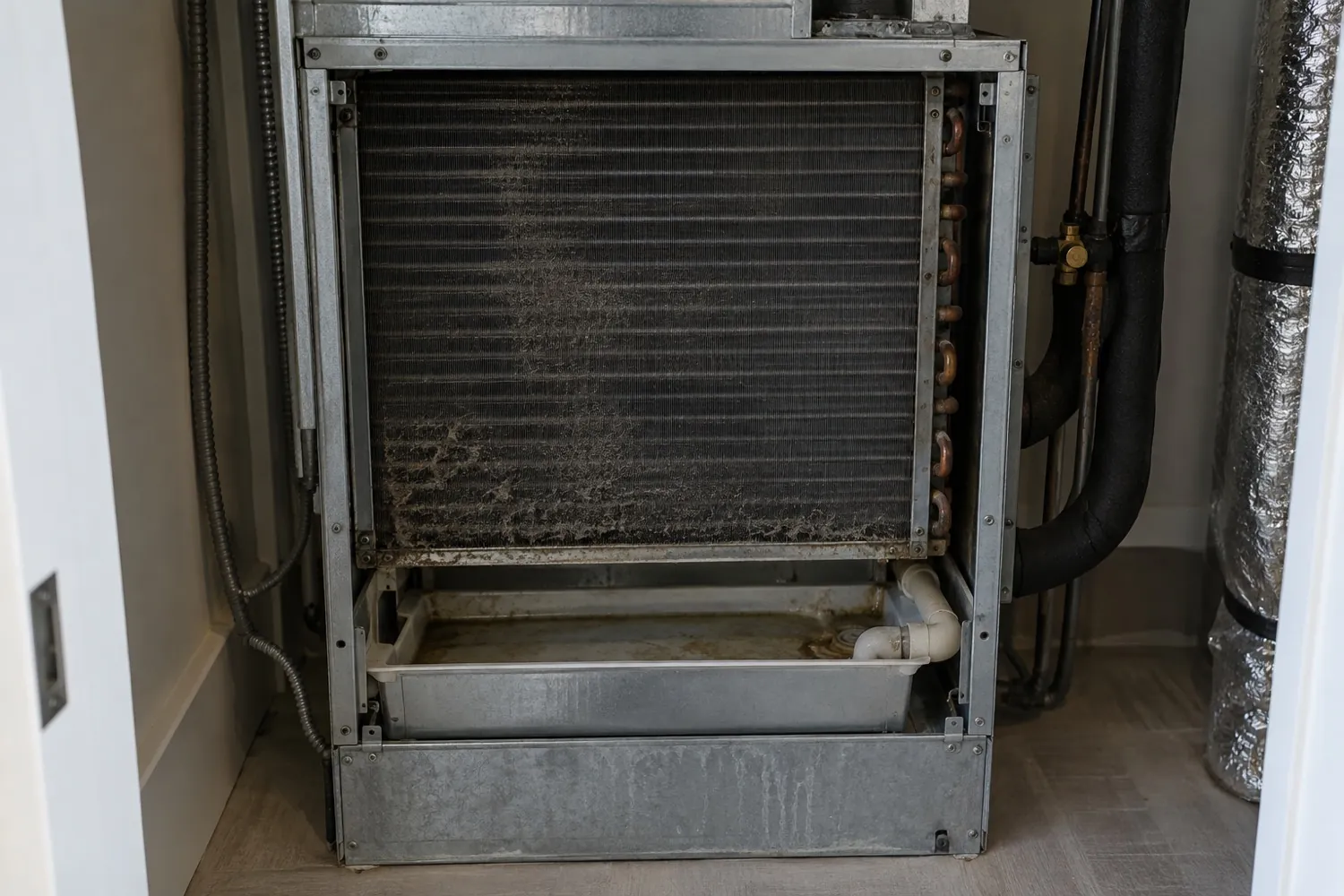
- Clean the fan coil, the coil face and the condensate pan
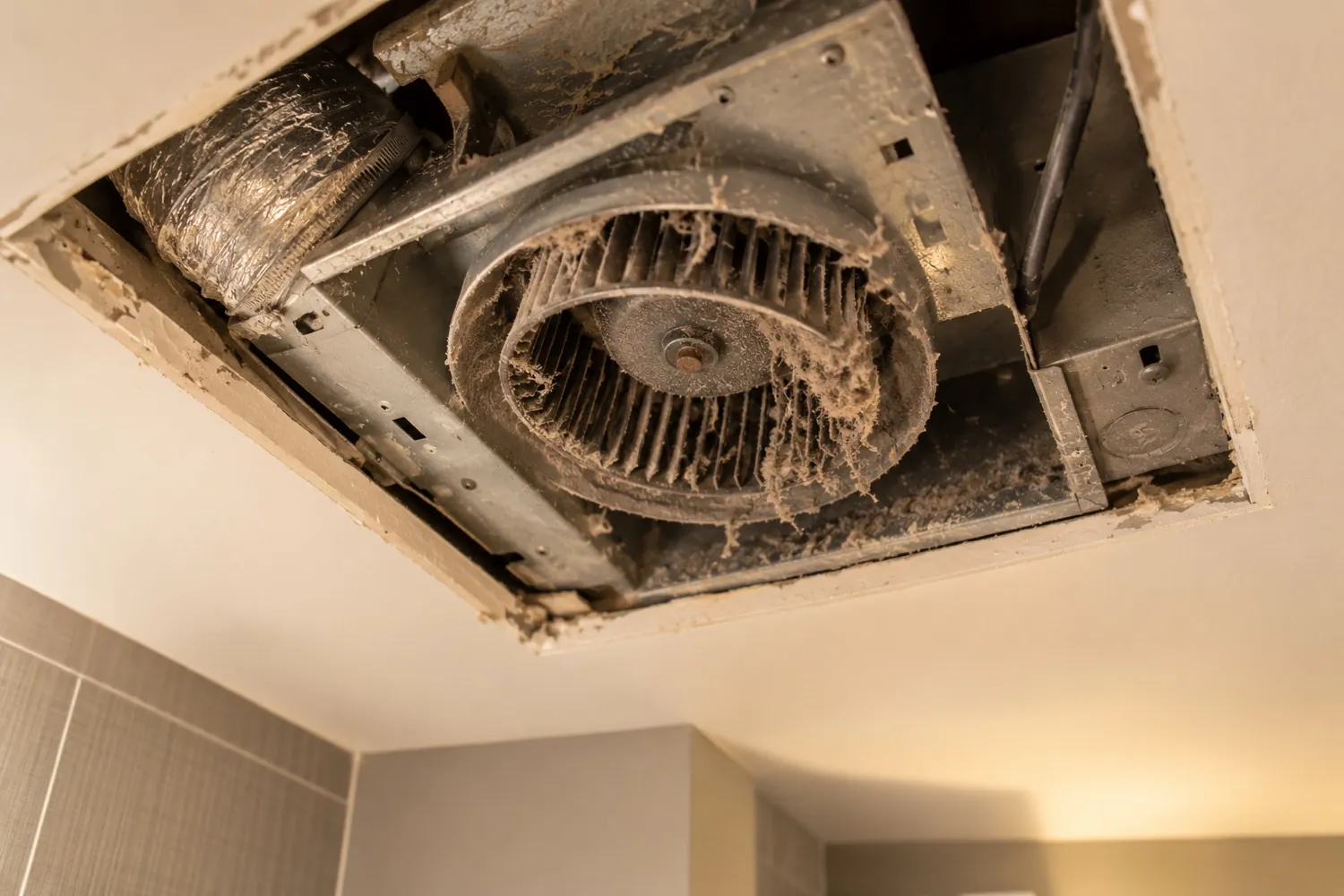
- Clean the suite side of the bathroom and kitchen exhaust
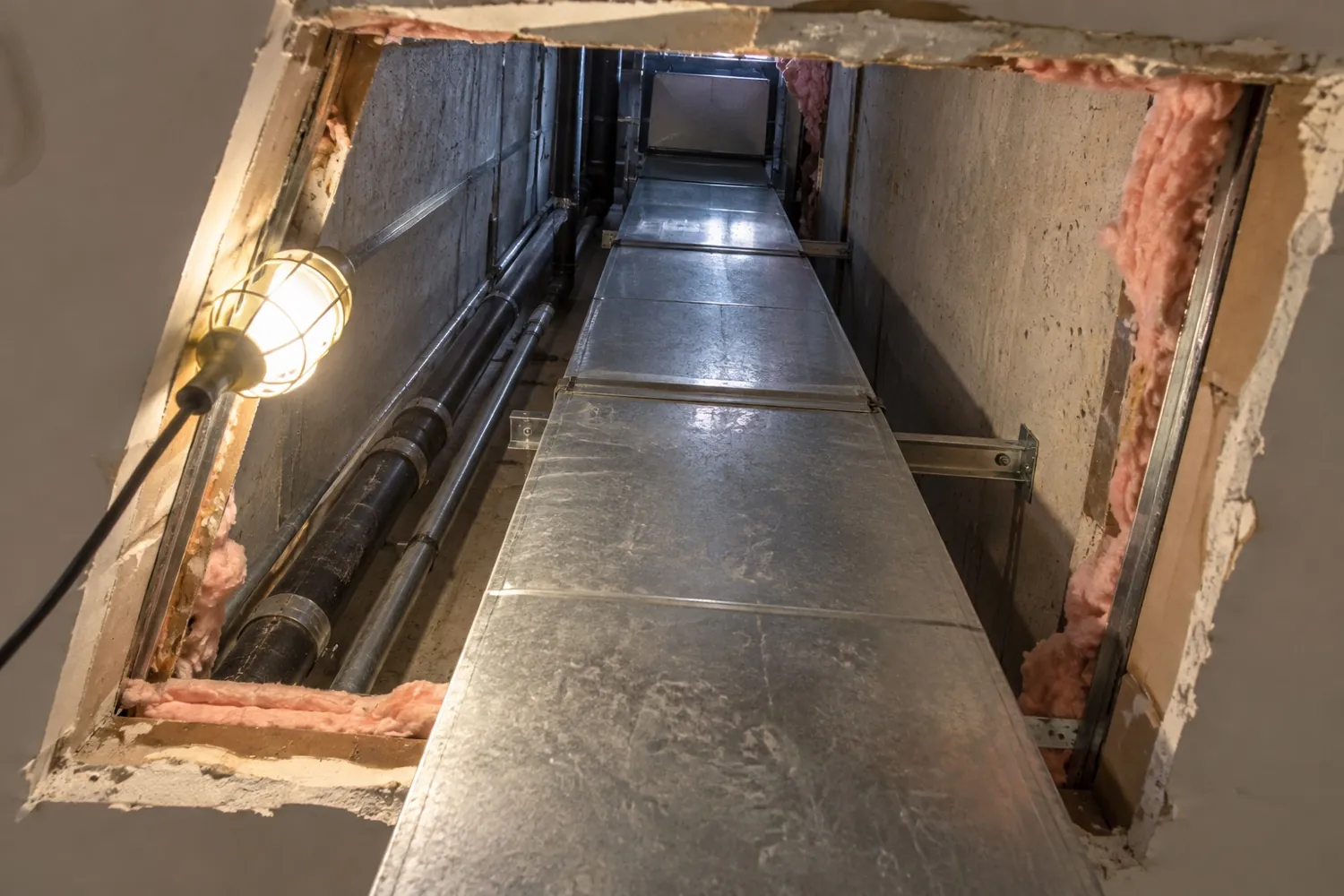
- Report anything found in the riser to you in writing, for the corporation
In Toronto specifically
Toronto's humid continental — long cold winters, humid summers, and a freeze-thaw shoulder season either side climate and its housing stock — Victorian and Edwardian semis through the old city, postwar bungalows and backsplits across Scarborough, North York and Etobicoke, and a downtown core that is almost entirely towers — decide what is worth doing first. Anything involving the gas appliance itself belongs with a TSSA-registered contractor, which duct cleaning is not. Ontario does not licence duct cleaning, so the checks worth making are liability insurance, a WSIB clearance certificate, and whether the technician holds NADCA certification — voluntary, but it means something.
Before the technician arrives
Four things worth doing — and the first one is usually the thing people get wrong.
- Check whether the corporation has rules about contractors and insurance — most do.
- Book the elevator if your building requires it.
- Find out whether the fan coil filter is yours to change or the building's.
- Say if the smell arrives from elsewhere, because that is a riser question.
What the work looks like
Photographs of condo and high-rise duct cleaning being carried out, so you know what to expect on the day.
How it works
Three steps, and you decide at the end of them.
-
1
You call and describe the problem
Tell us what you have noticed and where — the room, the smell, the noise, how long it has been going on. Give us your postal code and we will match you to an insured company covering your area. There is no form to fill in.
-
2
A local company takes it from there
They discuss the problem with you directly, arrange a time to inspect, and agree the work and the price with you before anything starts. That conversation is between you and them.
-
3
You decide whether to go ahead
You are under no obligation. If the quote or the approach is not what you wanted, you are free to say no and call someone else.
Condo and High-Rise Duct Cleaning — FAQs
Do I actually need Condo and High-Rise Duct Cleaning done?
In a stacked building a smell or a noise rarely belongs to the unit that reports it. The riser is shared, which is why this often has to be a building conversation rather than a suite one.
What does Condo and High-Rise Duct Cleaning involve?
Cleaning the in-suite fan coil and its filter, and the suite side of the exhaust. The riser itself is the corporation's, and a good company will tell you where the boundary is.
What makes this different in Toronto?
Toronto's humid continental — long cold winters, humid summers, and a freeze-thaw shoulder season either side climate and its housing stock — Victorian and Edwardian semis through the old city, postwar bungalows and backsplits across Scarborough, North York and Etobicoke, and a downtown core that is almost entirely towers — decide what is worth doing first. Anything involving the gas appliance itself belongs with a TSSA-registered contractor, which duct cleaning is not. Ontario does not licence duct cleaning, so the checks worth making are liability insurance, a WSIB clearance certificate, and whether the technician holds NADCA certification — voluntary, but it means something.
Are your partners insured?
Ontario does not licence this trade at provincial level, so the documents worth asking for are liability insurance and a WSIB clearance certificate. Any legitimate partner will show you both without being chased.
What does Condo and High-Rise Duct Cleaning cost?
It depends on the property, the size of the system and what the inspection finds, so we do not publish a price — a figure quoted on a web page is not one the attending company has agreed to. You get a price before any work starts.
Condo and High-Rise Duct Cleaning near you
- Stonegate-Queensway
- Morningside Heights
- Wexford/Maryvale
- West Humber-Clairville
- Agincourt North
- Clairlea-Birchmount
- Birchcliffe-Cliffside
- West Hill
- Glenfield-Jane Heights
- West Rouge
- Milliken
- Malvern East
- South Riverdale
- Eringate-Centennial-West Deane
- Bedford Park-Nortown
- Willowridge-Martingrove-Richview
- Islington
- Banbury-Don Mills
- Leaside-Bennington
- Steeles
- The Beaches
- Centennial Scarborough
- Tam O'Shanter-Sullivan
- Lawrence Park North
- Rockcliffe-Smythe
- Oakwood Village
- Dorset Park
- St.Andrew-Windfields
- Cliffcrest
- Mount Pleasant East
- Don Valley Village
- Golfdale-Cedarbrae-Woburn
- Newtonbrook West
- East L'Amoreaux
- York University Heights
- Agincourt South-Malvern West
- Hillcrest Village
- Alderwood
- L'Amoreaux West
- Lawrence Park South
Get matched with a local contractor
Tell us what you need and we will match you with a licensed, insured air duct cleaning company covering your area. No obligation.